E-book · 2026 edition
Tastes of Power
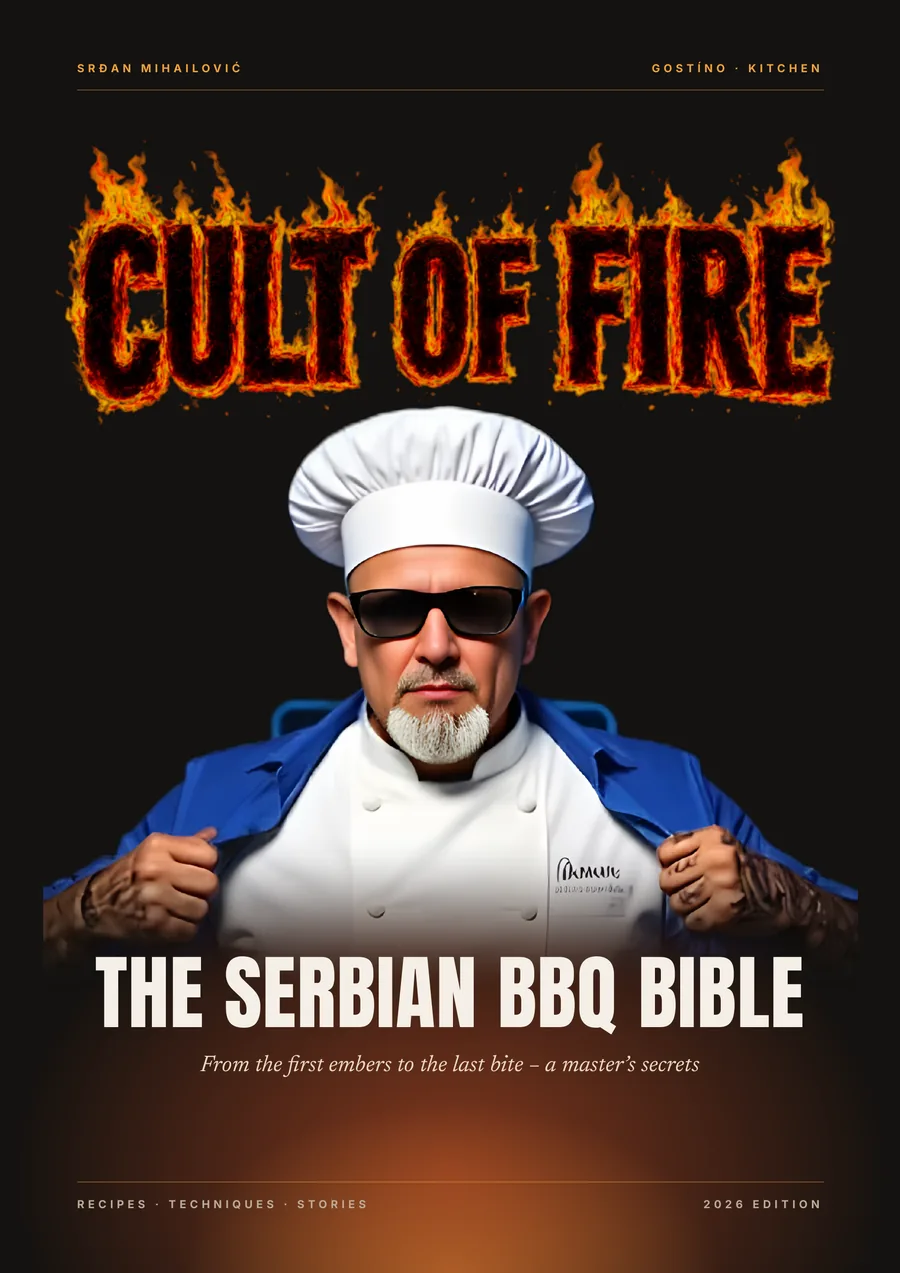
The Secret Tables of World Leaders Through History, 85 pages, PDF.
The secret tables of world leaders through history — thirty-six tables, thirty-seven recipes.
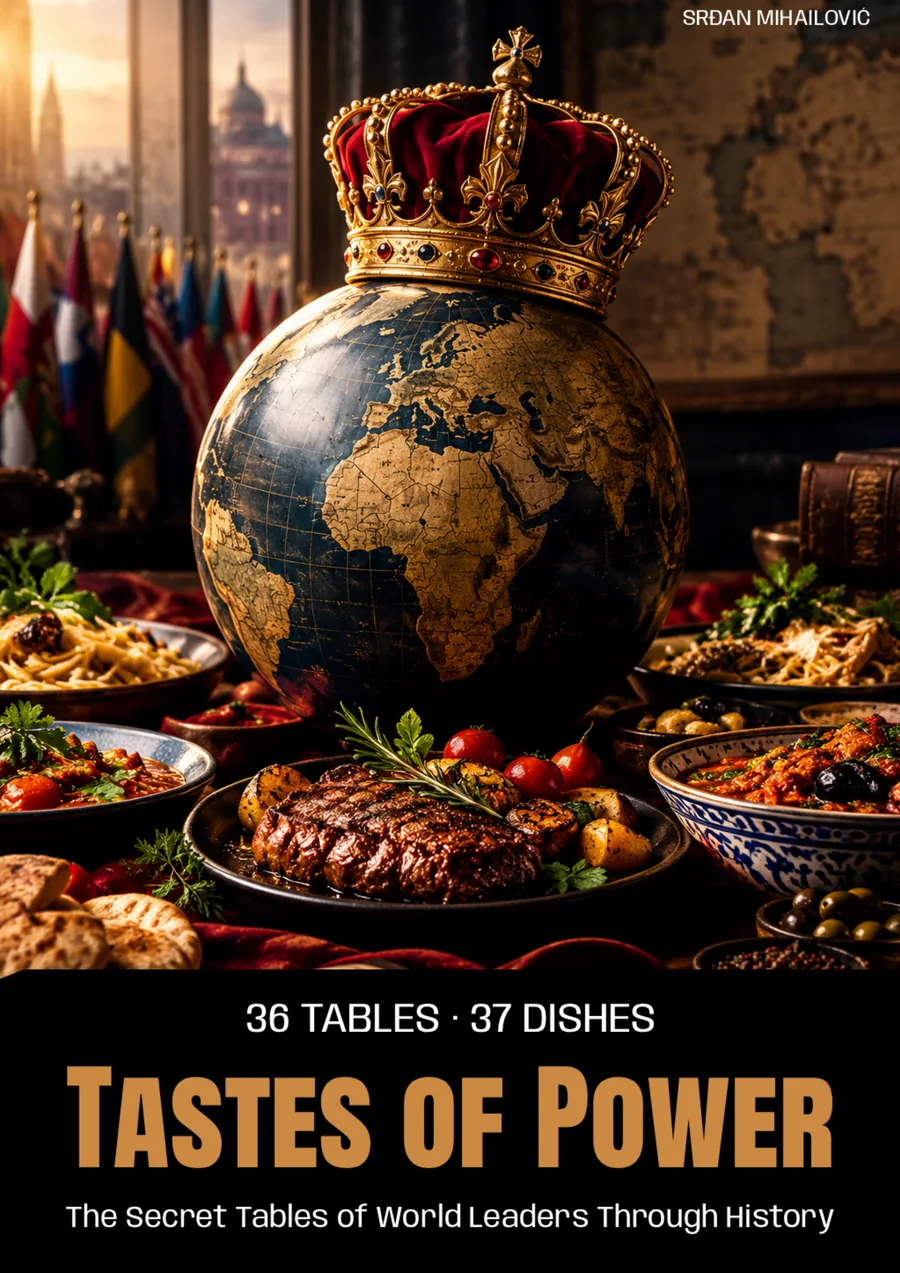
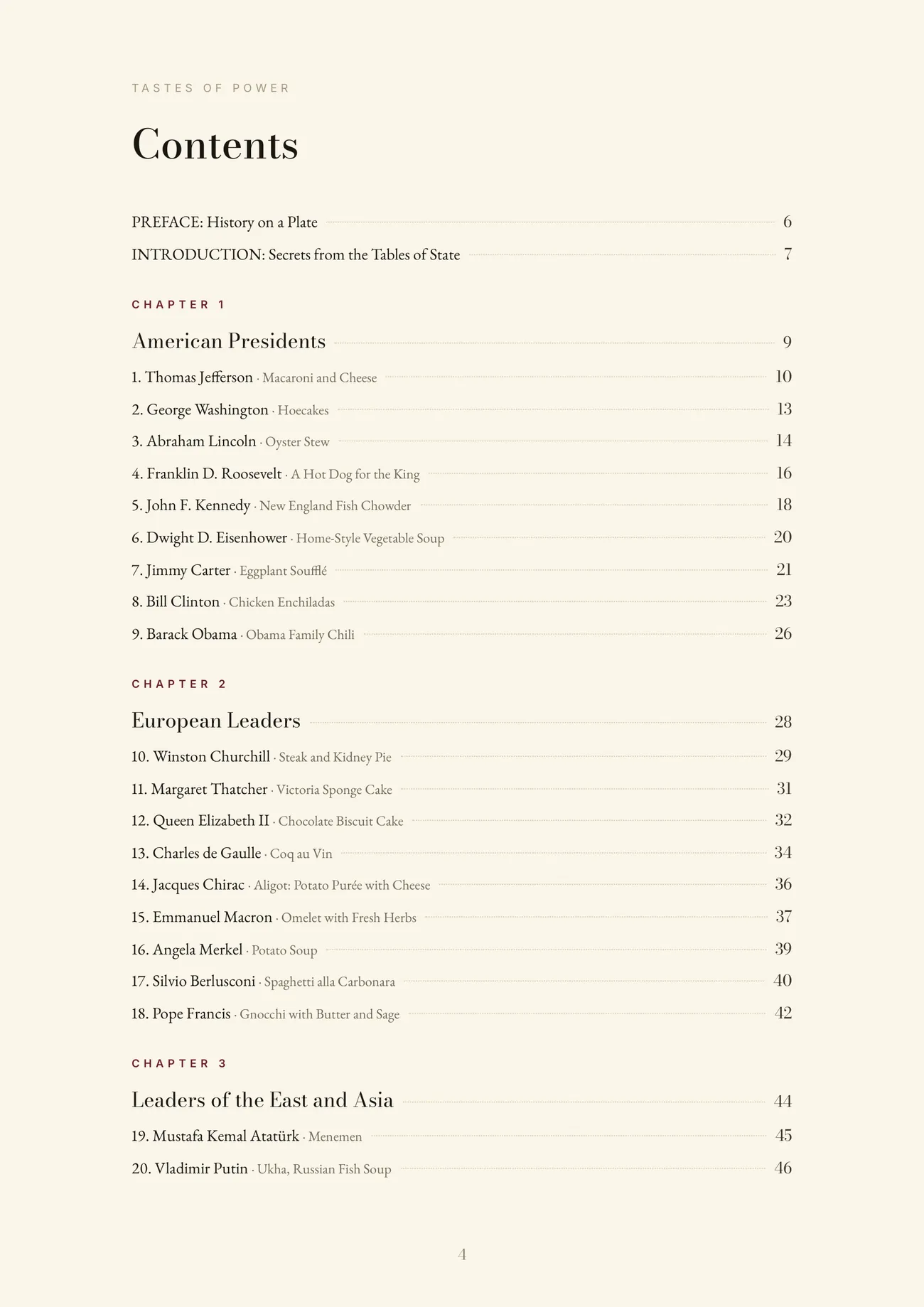
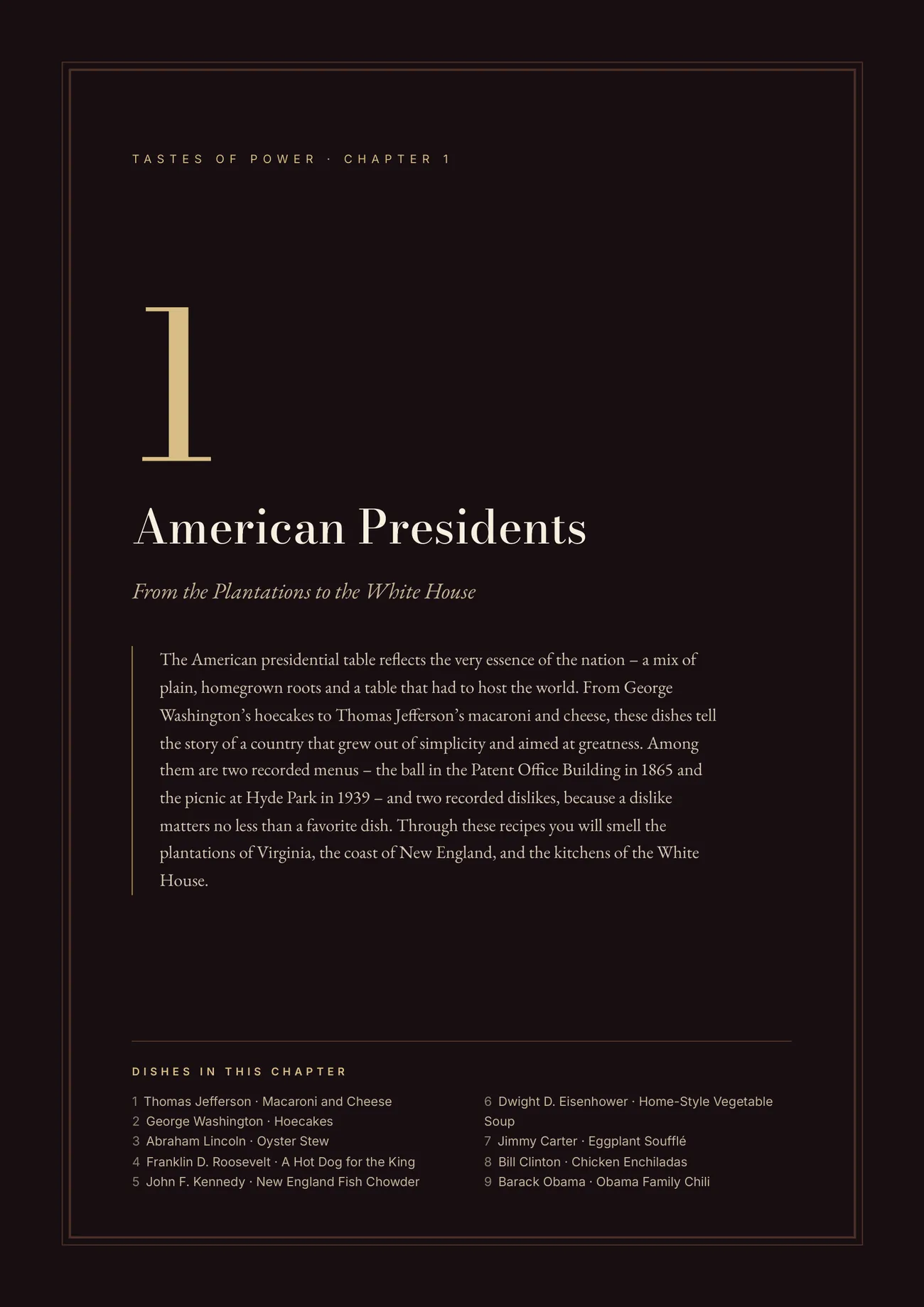
The book is organized geographically: American presidents, European leaders, the leaders of the East and Asia, the Global South. Every recipe gives the number of servings, the ingredients, numbered steps, and a Cook’s note — how the dish is made in a modern kitchen without losing its character.
| No. | Chapter | Entries | Whose tables |
|---|---|---|---|
| 01 | American Presidents From the Plantations to the White House | 9 entries | Thomas Jefferson · macaroni and cheese, with vanilla ice cream as the dessert in the same entry · George Washington · hoecakes · Abraham Lincoln · oyster stew · Franklin D. Roosevelt · a hot dog for the King · John F. Kennedy · New England fish chowder · Dwight D. Eisenhower · home-style vegetable soup · Jimmy Carter · eggplant soufflé · Bill Clinton · chicken enchiladas · Barack Obama · the family chili. With them come two framed passages with no recipe, about the recorded dislikes of Harry S. Truman for onions and George H. W. Bush for broccoli. |
| 02 | European Leaders From Wartime Bunkers to Royal Palaces | 9 entries | Winston Churchill · steak and kidney pie · Margaret Thatcher · Victoria sponge cake · Queen Elizabeth II · chocolate biscuit cake · Charles de Gaulle · coq au vin · Jacques Chirac · aligot · Emmanuel Macron · omelet with fresh herbs · Angela Merkel · potato soup · Silvio Berlusconi · spaghetti alla carbonara · Pope Francis · gnocchi with butter and sage |
| 03 | Leaders of the East and Asia Spices, Tradition, and Spirituality | 10 entries | Mustafa Kemal Atatürk · menemen · Vladimir Putin · ukha · Joseph Stalin · khinkali · Mahatma Gandhi · khichdi · Indira Gandhi · rajma · Lee Kuan Yew · Hainanese chicken rice · Golda Meir · chicken soup with matzo balls · Yasser Arafat · musakhan · Zhou Enlai · Peking duck · Kim Jong-un · Pyongyang cold noodles |
| 04 | The Global South Rhythm, Resistance, and Passion | 8 entries | Nelson Mandela · umngqusho, samp and beans · Fidel Castro · ropa vieja · Hugo Chávez · pabellón criollo · Eva Perón · beef empanadas · Kwame Nkrumah · fufu and groundnut soup · Thomas Sankara · tô, millet porridge with okra sauce · Gamal Abdel Nasser · molokhia · Hassan II · tagine with prunes |
Every entry opens with one italic sentence and a short account of how the dish is connected to the leader and to the time he lived in. Then come the number of servings, the ingredients in the left column, the numbered steps in the right, and at the end the Cook’s note. Click a page to see it larger.
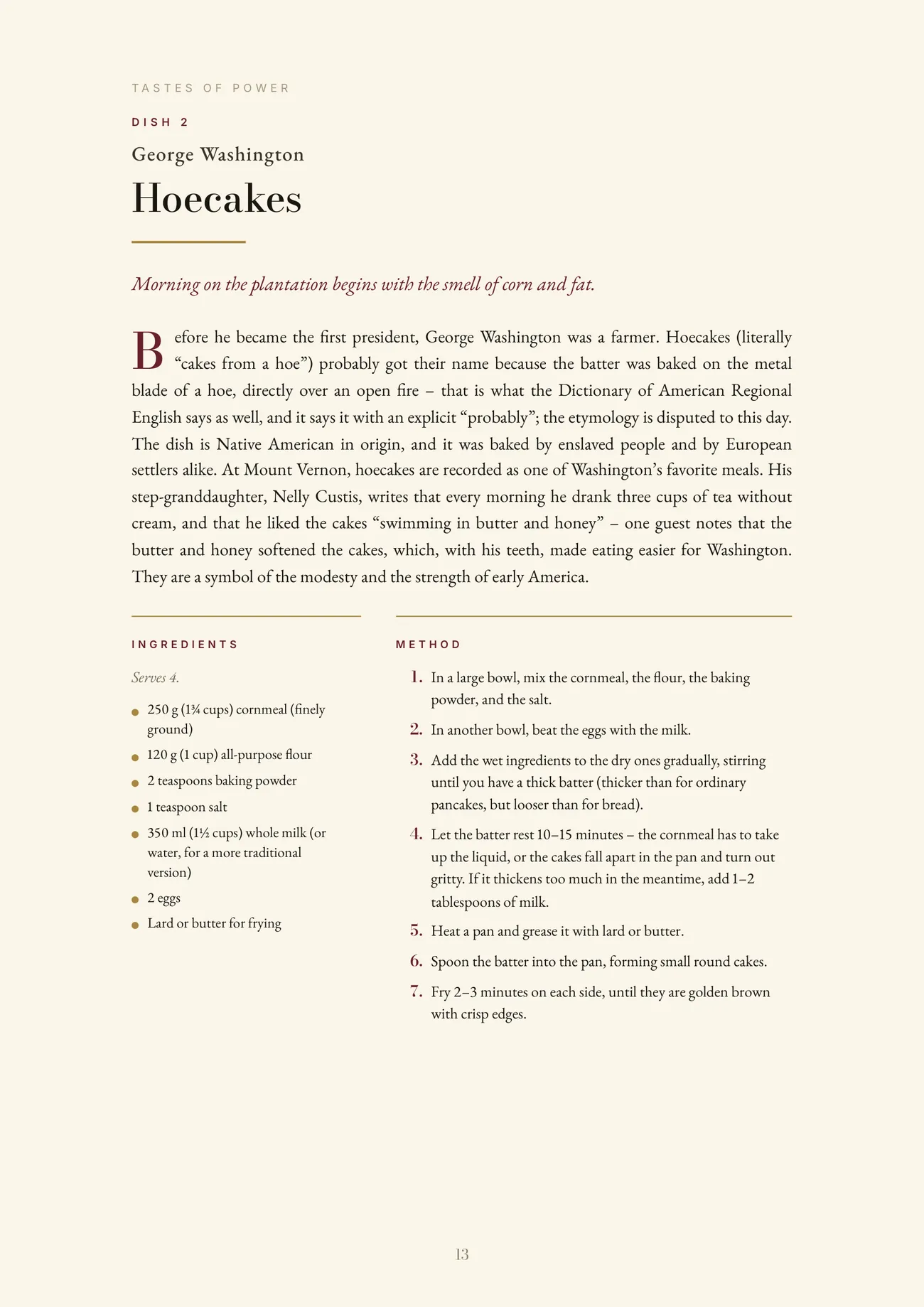
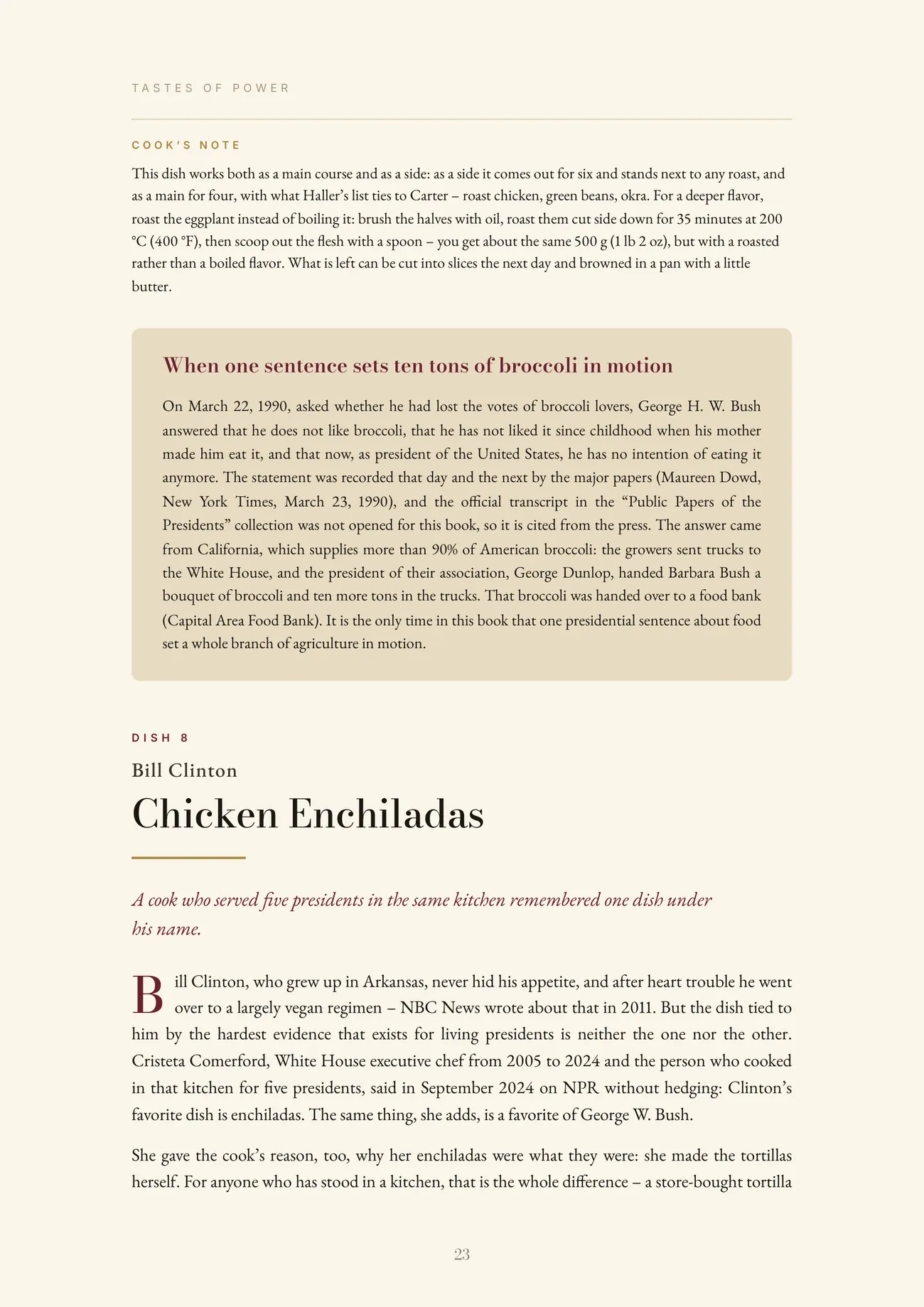
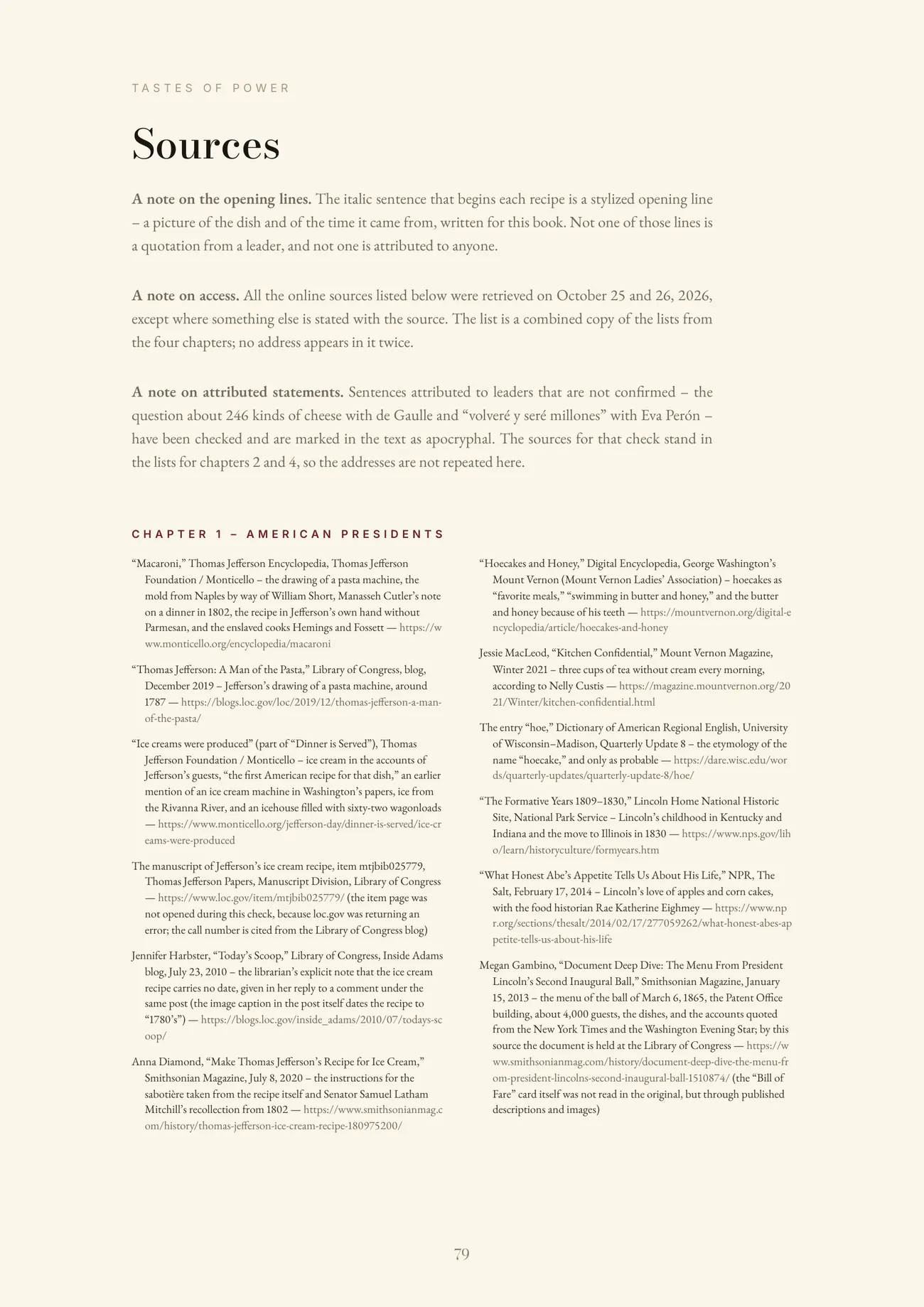
The dishes were chosen from the written record where a record exists, and from the culinary tradition of the country and the era where there is none. That is not buried in small print: it stands in the text itself, with every dish, and it is gathered at the back of the book.
The link between leader and dish rests on something recorded: a written document, a first-hand account, a public statement by the leader himself, or a press report of the event itself — from Jefferson’s ice cream recipe in his own hand to the banquet with Pyongyang cold noodles in April 2018.
No link between the leader and the dish was found in any serious source, and the text says so. The dish is authentic to its country and its era, and the description of the dish, its origins and its technique rests on the sources listed.
Two dishes from the first chapter are recorded on the menu cards of official occasions, but no source says that the leader himself ate the dish. That is written in the text too, together with the caveat about the recipe itself.
The italic sentence that opens each recipe is not a quotation from a leader but a stylized opening line written for this book. Where a statement really is attributed to someone, that is said — and two well-known unconfirmed statements, de Gaulle’s question about the kinds of cheese and Eva Perón’s “volveré y seré millones,” are marked in the text as apocryphal. The online sources were retrieved on October 25 and 26, 2026, except where another date is given with the source.
The whole book, all thirty-six tables and thirty-seven recipes, bought once — yours to keep.
The Secret Tables of World Leaders Through History, 85 pages, PDF.
Checkout is through Gumroad: once you pay, the download link arrives in your inbox right away. Gumroad opens soon — until then, this page is a preview of the book.
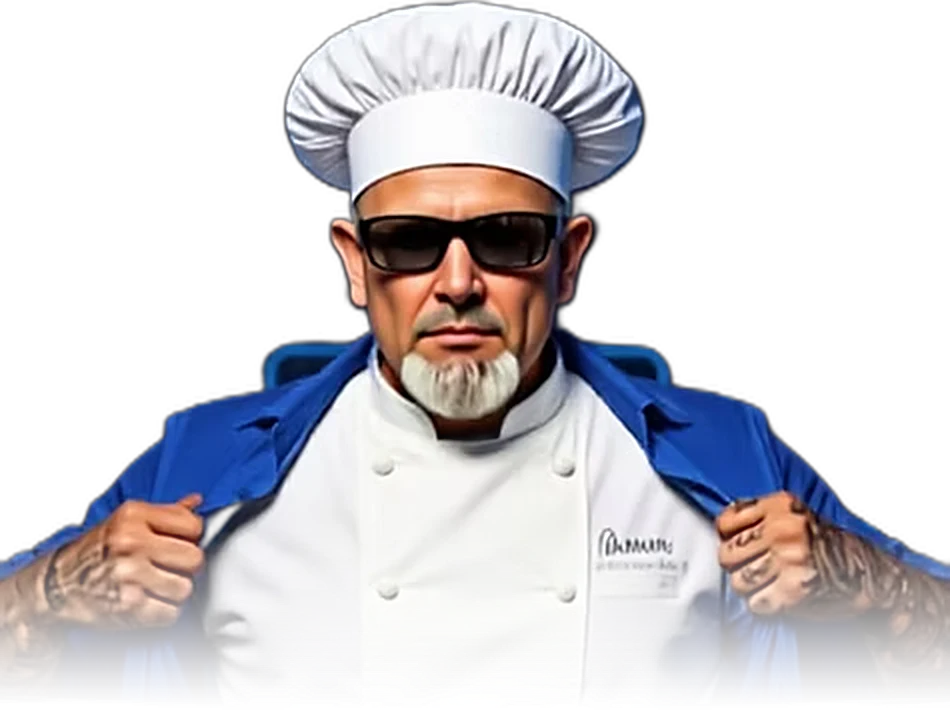
More than thirty years in hospitality: in top hotel kitchens and restaurants and on cruise ships. He has worked and lived on four continents, so he knows the kitchens in this book from the other side of the stove as well.
He is the founder of Gostíno.ai and the builder of the gostino.app website, where the hospitality trade meets modern digital tools.
Hunger is the only true democracy, and a good meal the greatest victory.
An 85-page PDF, 2026 edition. It reads on a phone, tablet or computer; the contents at the front lead to every entry.
American English. There is also a Serbian edition, Ukusi moći: tajne trpeze svetskih lidera kroz istoriju, with the same dishes.
No, and the book says so openly. Of the thirty-six entries, in eighteen the link between leader and dish rests on something recorded. For sixteen dishes no link was found in any serious source — the dish then stands as a dish of his era and his part of the world, and the text says so. Two dishes from the first chapter are recorded on the menu cards of official occasions, but no source says the leader himself ate the dish.
No. They are stylized opening lines written for this book, carrying the spirit of the dish and of its time. Not one of them is attributed to anyone. Where a statement really does exist as attributed, that is said, along with how reliable the attribution is.
In metric units — grams and milliliters — with US customary equivalents in parentheses, and a few traditional expressions kept where they are necessary for the character of a dish. Every recipe also gives the number of servings.
Yes, 87 of them at the back, grouped by chapter and in the order the dishes appear; no address is repeated. The online sources were retrieved on October 25 and 26, 2026, except where another date is given with the source. A note on the limits of the sources follows the list.
No. The dishes are reconstructed for an ordinary kitchen; where a technique asks for something unusual, the Cook’s note says what to do instead.
Checkout is through Gumroad: once you pay, the download link arrives in your inbox right away. Gumroad opens soon — until then, this page is a preview of the book.
Thirty-six tables are waiting, and every one of them says where it knows what it claims from.